- About us
- A new Institute dedicated to combating leukemia
- Our news
- Support us
- You are
- Patients and relatives
- To receive care and support
- Become an expert patient
- Discover the Leukemia Institute
- Researchers
- Research
- Clinical trials
- Discover the Leukemia Institute
- Healthcare professionals
- Refer a patient
- Our clinical research
- Discover the Leukemia Institute
- Industry partners
- Discover the Leukemia Institute
- Translational research
- Donors
- Support us
- Discover the Leukemia Institute
- Care
- Patient care
- Our clinical services
- Our medical laboratories
- Patient information
- Research
- Our research teams
- Our technological platforms
- Our clinical research
Michaela Fontenay’s team – Normal and pathological hematopoiesis
Michaela Fontenay
Team leader
Institut Cochin

Research themes
The research team investigates the cellular mechanisms at the origin of myeloid malignancies (acute myeloid leukemia, myelodysplastic neoplasms) including the anomalies of metabolic pathways, post-transcriptional regulations of gene expression (splicing, translation…) and bone marrow microenvironment.
Research areas
Identification of dysfunctions in mitochondrial dynamics and cell death pathways in acute myeloid leukemias. Ferroptosis is a pathway of regulated cell death induced by iron-dependent lipid peroxidation. Its targeting has emerged as a promising therapeutical strategy in AML. Ferroptosis is functionally related to mitochondria dynamics and mitophagy. The objective of this axis is to characterize the molecular and metabolic determinants of sensitivity to ferroptosis in distinct subgroups of AML.
Identification and functional characterization of anomalies in RNA splicing, translation and decay in AML and myelodysplastic neoplasms. Post-transcriptional regulations of gene expression contribute to leukemic cell reprogramming and resistance to treatments. The objectives of this axis are (i) to identify neo-antigens generated by splicing aberrancies and characterize the lymphocyte T CD8 immune response, and (ii) to identify protein expression bias due to RNA selective translation or decay and draw the consequences on leukemic cell biology and sensitivity to treatments.
Study of functional interactions between leukemic cells and their microenvironment. Mesenchymal stroma cells of the microenvironment are implicated in the maintenance of an inflammatory state of the bone marrow facilitating the emergence and progression of myelodysplastic neoplasms including VEXAS syndrome and AML. The contribution of immune cells still remains elusive. The objectives of this axis are (i) to study metabolic interactions between leukemic and stromal cells conferring resistances to treatments both in vitro and in vivo via ossicles mimicking humanized bone marrow niche in mice and (ii) to decipher the pro-inflammatory role of T CD8 lymphocytes.
Featured research projects
Deciphering the factors of vulnerability to ferroptosis iin acute myeloid leukemia
The objectives are to develop a score predictive of sensitivity to ferroptosis, to identify genetic and microenvironmental modulators of ferroptosis and to propose new therapeutic combinations
Identification of neo-antigens in myelodysplastic neoplasms with splicing factor gene mutations
The objective is to establish their immunogenicity and characterize the T cells specific to the neoantigen.
Immune T cell response in AML
The objective is to study the role of T CD8 lymphocytes in the development and/or evolution of AML and to determine the mechanisms of their activation.
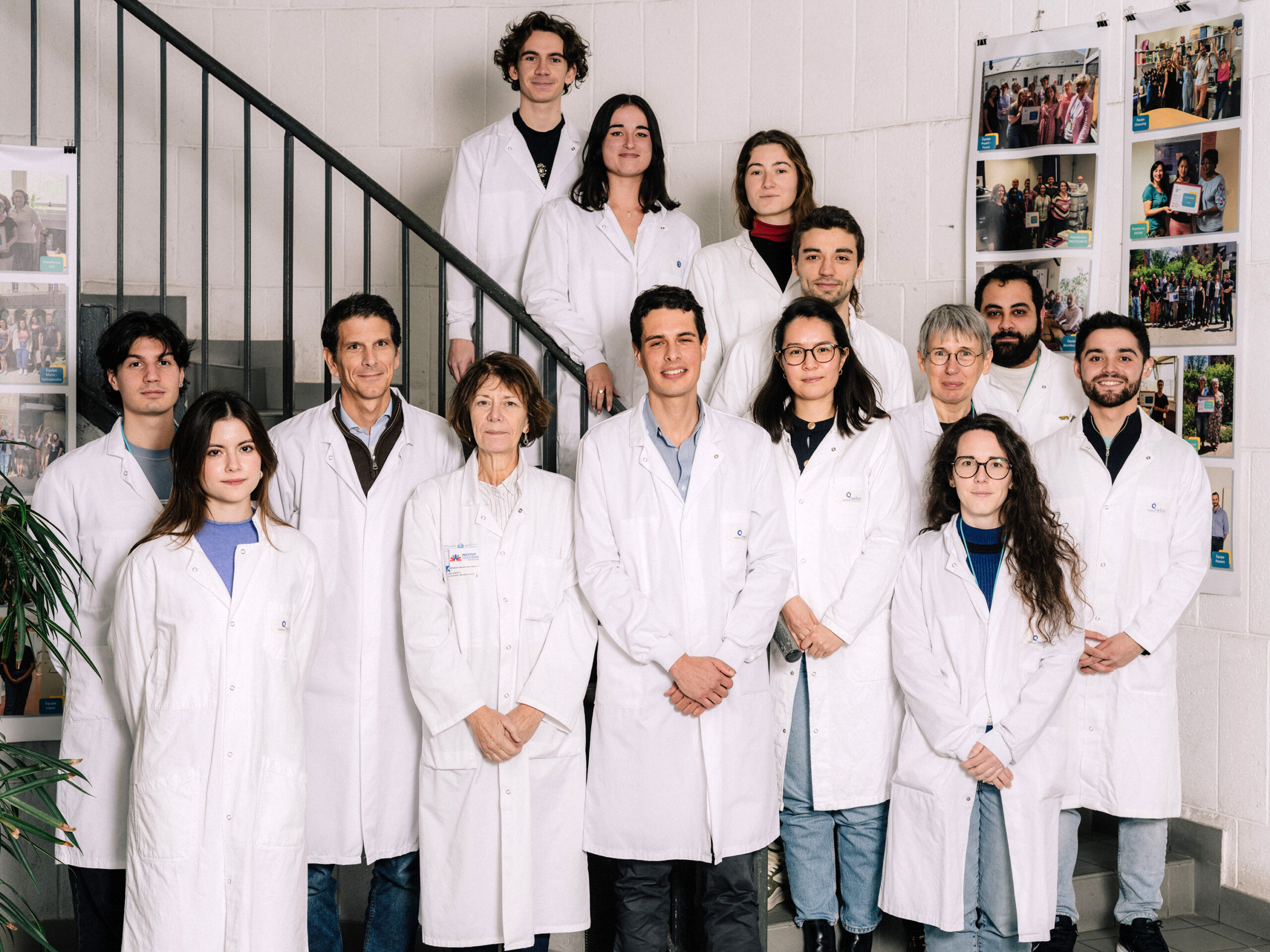
Michaela Fontenay's team members
SIMONI YannickTeam co-director CRCN INSERMFONTENAY MichaelaTeam director, PU-PHBOUSCARY DidierPU-PHLEVAVASSEUR FrançoiseIR INSERMKOSMIDER OlivierPU-PHCHAPUIS NicolasMCU-PHBIRSEN RudyMCU-PHBOUSSAID IsmaelPHUGUEDON AxelleAIROMBAUT DavidIE bioinformatician CDDTOURVILLE AuroreIE CDDZUBAIDAN TuerdiPost-docAZIEZ LisaPost-docMUKHERJEE DevdeepPost-docRACHED TonyPhD studentDEREDEC NicolasPhD studentCHABBANE ThellaPhD studentCERQUIDO ElodyPhD studentMOLINA SebastianPhD studentFRIEDRICH ChloéPHDECROOCQ JustinePHWILLEMS LisePHALMIRE CarolePHCADRO VincentAHUScientific publications
Marie Sabatier & al, Cancer Discov, 2023
C/EBPα Confers Dependence to Fatty Acid Anabolic Pathways and Vulnerability to Lipid Oxidative Stress-Induced Ferroptosis in FLT3-Mutant LeukemiaRead the publication
Olivier Kosmider & al, Nat Commun., 2024
VEXAS syndrome is characterized by inflammasome activation and monocyte dysregulationRead the publication
David Rombaut & al, Nat Commun., 2024
Accelerated DNA replication fork speed due to loss of R-loops in myelodysplastic syndromes with SF3B1 mutationRead the publicationIndustrial partners
Academic and charitable funding
- Our technological platforms
- Our clinical services
- Discover the Leukemia Institute
- Translational research
- Our clinical research
- Clinical trials
- Become an expert patient
- To receive care and support
- Our news
- A new Institute dedicated to combating leukemia