
- About us
- A new Institute dedicated to combating leukemia
- Our news
- Support us
- You are
- Patients and relatives
- To receive care and support
- Become an expert patient
- Discover the Leukemia Institute
- Researchers
- Research
- Clinical trials
- Discover the Leukemia Institute
- Healthcare professionals
- Refer a patient
- Our clinical research
- Discover the Leukemia Institute
- Industry partners
- Discover the Leukemia Institute
- Translational research
- Donors
- Support us
- Discover the Leukemia Institute
- Care
- Patient care
- Our clinical services
- Our medical laboratories
- Patient information
- Research
- Our research teams
- Our technological platforms
- Our clinical research
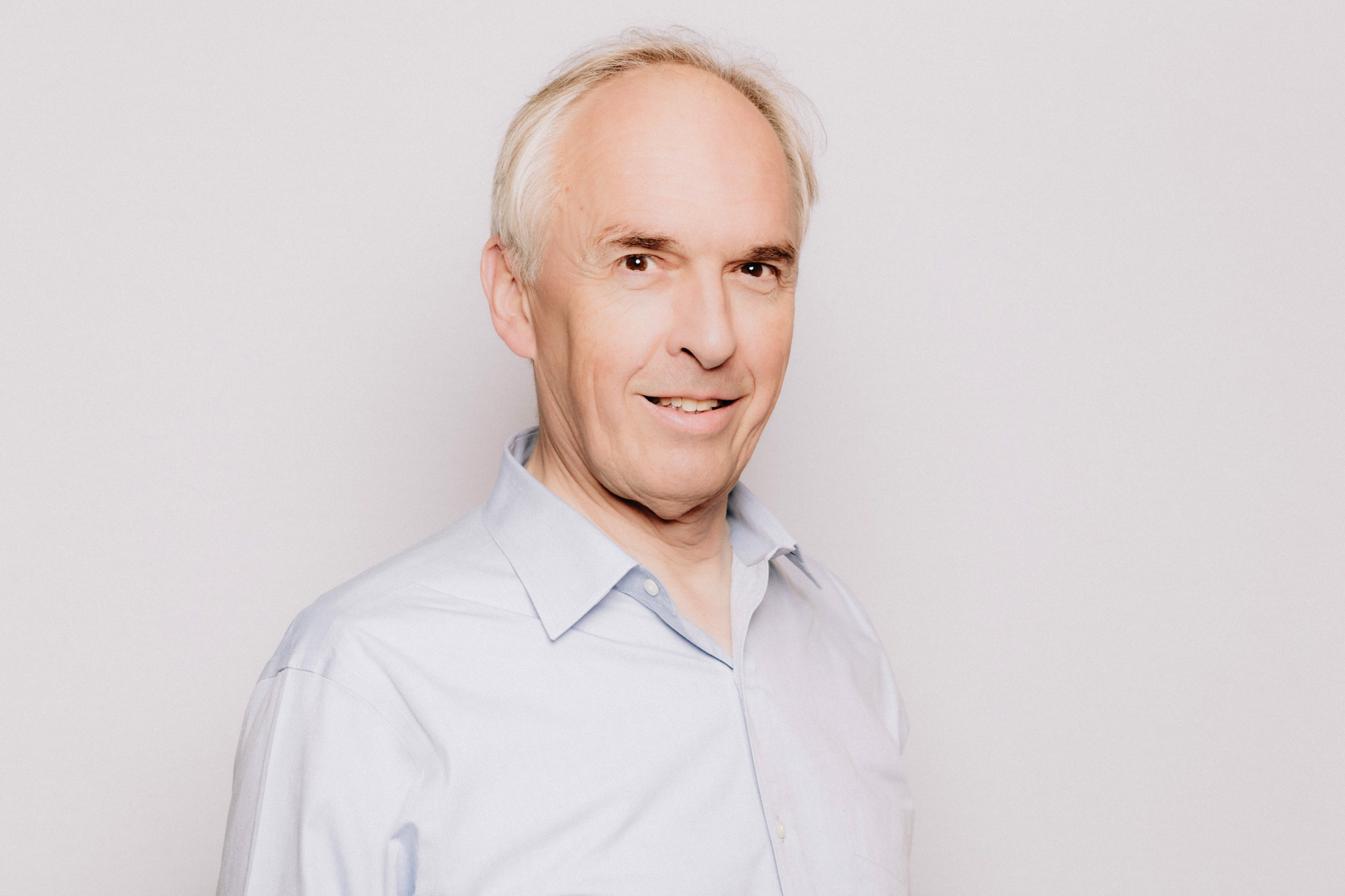
Hugues de Thé’s team – Molecular pathology
Hugues de Thé
Team leader
Institut de recherche Saint-Louis
Research themes
Our team aims to decipher the cellular and molecular mechanisms of therapeutic response in acute myeloid leukemia. Our model of choice is the response of acute promyelocytic leukemia to retinoic acid and arsenic. Recent work focuses on the response to conventional chemotherapy.
Research areas
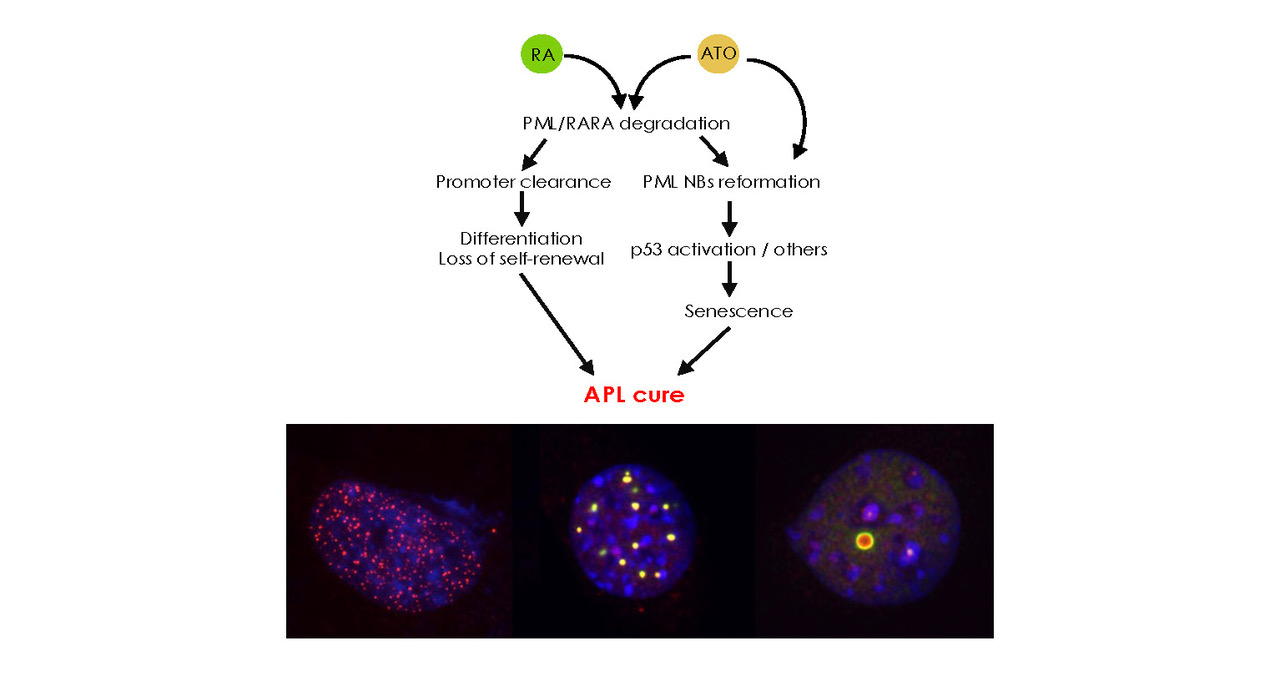
We have demonstrated that Pml controls sumoylation, coupling it to oxidative stress. Furthermore, normal Pml protein is essential for the PML/RARA fusion-induced LAP response. Work in progress shows that Pml is also important for the response to conventional chemotherapy, via the control of senescence. In both models, we are exploring the structure/function relationships of Pml (redox sensing site, sumoylation sites…).
In APL, efficient therapeutic response requires the presence of Pml, but disease initiation is linked to interference with RARA signaling. Indeed, diseases similar to classical PBL have been described in patients after overexpression of RARA following viral insertion. Previous studies suggest that transcriptional repression plays a role in immortalization. We aim to understand the molecular mechanisms of repression and the nature of the downstream targets involved in acquiring self-renewal and blocking differentiation.
We are pursuing two approaches in parallel. One uses mouse models of AML in which the Pml gene has been inactivated. These show a blocked response to conventional chemotherapy, associated with an absence of treatment-induced senescence. The other model explores the single-cell transcriptional response directly in patients. These converging approaches address the gene networks and signaling cascades mobilized in response to conventional chemotherapy.
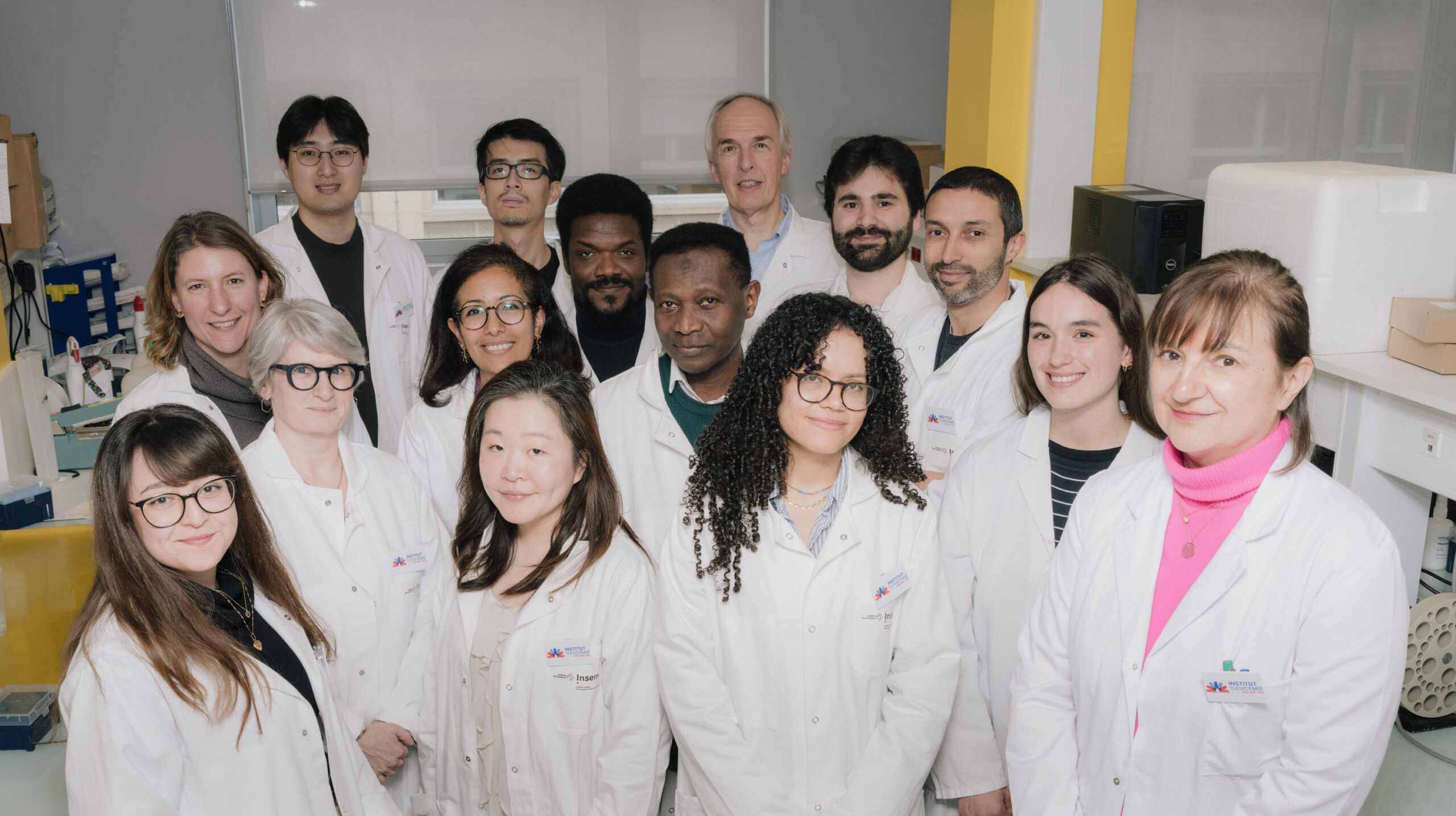
Hugues de Thé's team members
Majdouline Abou-GhaliPost-doctoral felowPaolo AyakaPhD studentCaroline BerthierResearch engineer, Collège de FranceThassadite DiramiResearch scientist, UPCCécile EsnaultCRCN, INSERMOmar FerhiResearch engineer, INSERMMarie-Claude GeoffroyCRHC, CNRSWissem HamelContract engineerMichiko KawatikaResearch scientist, UPCHao LiangContract engineerAdèle MarmusePhD studentHassane SoilihiTechnician, CNRSHugues de ThéProfessor, Collège de FranceYi ZhangPost-doctoral fellowHsinchieh WuPost-doctoral fellowScientific publications

Pierre Bercier & al, Cancer Discover. 2023
Structural Basis of PML-RARA Oncoprotein Targeting by Arsenic Unravels a Cysteine Rheostat Controlling PML Body Assembly and FunctionRead the publication
Hsin-Chieh Wu & al, Cancer Discover. 2021
Actinomycin D Targets NPM1c-Primed Mitochondria to Restore PML-Driven Senescence in AML TherapyRead the publication
Anthony Letai, Hugues de The, Nat Rev Cancer, 2025
Conventional chemotherapy: millions of cures, unresolved therapeutic indexRead the publicationFunding
- Our technological platforms
- Our clinical services
- Discover the Leukemia Institute
- Translational research
- Our clinical research
- Clinical trials
- Become an expert patient
- To receive care and support
- Our news
- A new Institute dedicated to combating leukemia