- About us
- A new Institute dedicated to combating leukemia
- Our news
- Support us
- You are
- Patients and relatives
- To receive care and support
- Become an expert patient
- Discover the Leukemia Institute
- Researchers
- Research
- Clinical trials
- Discover the Leukemia Institute
- Healthcare professionals
- Refer a patient
- Our clinical research
- Discover the Leukemia Institute
- Industry partners
- Discover the Leukemia Institute
- Translational research
- Donors
- Support us
- Discover the Leukemia Institute
- Care
- Patient care
- Our clinical services
- Our medical laboratories
- Patient information
- Research
- Our research teams
- Our technological platforms
- Our clinical research
Press
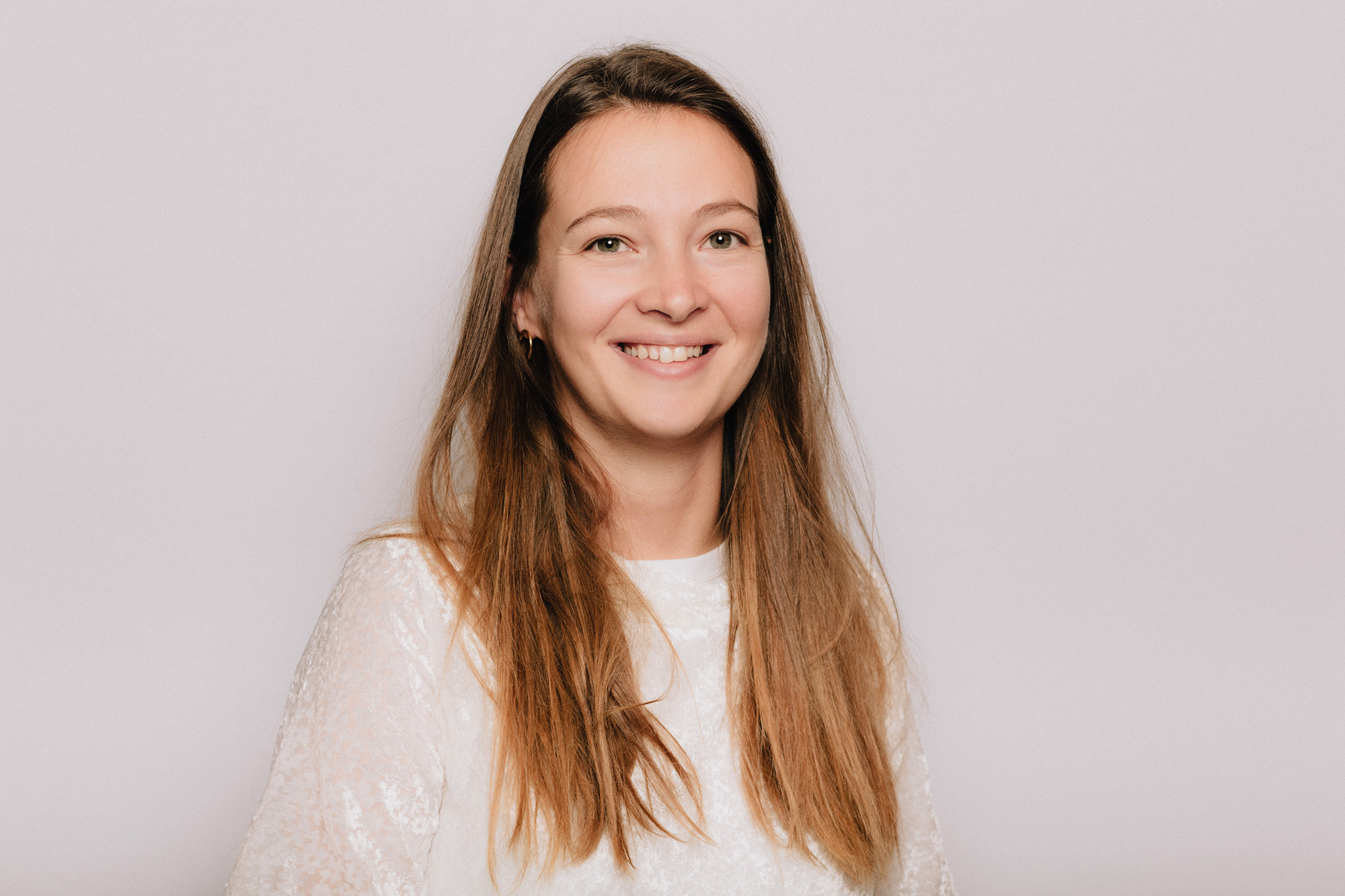
Your contact person
Charlotte Bouquerel
Head of Strategic Development
Available to assist you with interview requests, reports, or filming on all medical, scientific, institutional, and event-related topics connected to the Institute’s activities, as an active contributor in the fight against leukemia.

Press information
Leukemia and Childhood: Focus on Pediatric Advances
Pediatric leukemias account for nearly one-third of childhood cancers and, despite significant therapeutic progress, certain subtypes remain challenging to treat, particularly in cases of resistance to standard treatments.
The 2025 Olga Sain Prize honors a major breakthrough against leukemias
The 2025 Olga Sain Prize from the League Against Cancer is awarded to Diana Passaro, researcher at the Cochin Institute and the Leukemia Institute, for a major breakthrough in the fight against acute leukemias. Her team adopts an innovative approach that targets not only cancer cells but also their microenvironment, with the aim of improving treatment efficacy.
“Curing without chemotherapy”: the therapeutic revolution of LAP
Once considered one of the most formidable forms of leukemia, acute promyelocytic leukemia (LAP) is now a symbol of hope: it has become the first leukemia curable without chemotherapy.
Editorial by Professor Hugues de Thé
Since 1607, Saint-Louis Hospital has been an iconic center of French medicine, initially pioneering in the treatment of infectious diseases, then dermatological and hematological conditions.
It was here that some of the major advances in leukemia treatment emerged, such as the discovery of the HLA system—a key compatibility system between transplant donors and recipients—by Jean Dausset, which earned him the Nobel Prize in Physiology or Medicine in 1980.
Despite these advances, significant challenges remain: it is essential to better understand each type of leukemia in order to develop new treatments and improve patients’ quality of life.
Leukemias are aggressive diseases with complex and intensive treatments. Progress requires a deep understanding of the biology of each leukemia type. This precise knowledge of molecular mechanisms enables the development of more targeted, effective, and better-tolerated therapies.
Some forms, such as acute promyelocytic leukemia, illustrate the power of these approaches: the abnormality can be neutralized, leading to rapid recovery. These successes show that leukemias, which often have simpler biology than solid tumors, provide an ideal ground for therapeutic innovation.
But innovation does not always follow a plan. It often arises from unexpected intersections, intuitions, and collaborations. This is exactly what the Institute seeks to foster: an ecosystem where researchers and clinicians work together, in a setting conducive to the emergence of the unexpected.
Research time is not the same as patient time. Years can pass between a fundamental discovery and its clinical application. This gap reminds us of the importance of supporting free, patient, and visionary research. It is within this long-term perspective that decisive advances are born.
reated as part of the France 2030 initiative and the latest IHU call for projects, the Institute brings together the strengths of several major hospital and academic centers: Saint-Louis, Necker, Cochin, Robert-Debré, Avicenne, as well as École Polytechnique, CEA, and ESPCI. Together, we aim to make this Institute an international reference center in the fight against leukemias.
Our mission rests on three inseparable pillars: Caring, by providing treatments tailored to each patient while considering their quality of life; Research, by closely linking fundamental science to clinical practice; and Teaching, by sharing knowledge with the medical and scientific community.
The Paris Saint-Louis Leukemia Institute aims to be a driving force for transformation, capable of supporting innovative projects, showcasing French excellence, and raising public awareness about the challenges of leukemia. It seeks to give renewed visibility to a committed community working daily to improve patients’ lives.”
Pr Hugues de Thé
Director of the Leukemia Institute – Professor at the Collège de France
Publications
The press talks about the Leukemia Institute.
- Ouest France – September 2025
- Pourquoi Docteur ? – October 2025
- Le nouvel économiste -October 2025
- Active radio – October 2025
- L'Est Républicain – October 2025
- La Veille -October 2025
- Le quotidien du médecin – November 2025
- POC – November 2025
- L'EXPRESS – November 2025
- Grand angle santé – December 2025
- La gazette du LABORATOIRE – Décember 2025
- Le quotidien du médecin – January 2026
- Que choisir Santé – February 2026
- L'Essentiel Paris – February 2026
The Leukemia Institute in figures
1stLeukemia Treatment and Research Center
16Research Teams
10Clinical Departments
4Medical Biology Laboratories
Our research areas
Axis 1: MECHANISMS
Basic biology
-
Decipher the heterogeneity of leukemias using a multi-omics approach
-
Identify intrinsic vulnerabilities of leukemias
-
Explore the cellular consequences of therapeutic stresses
Axis 2: MICROENVIRONMENT
Stem cells and microenvironment
-
Study cellular interactions between leukemic cells, stroma, and immune effectors
-
Explore the cellular consequences of therapeutic stresses
Axis 3: PRECISION
Therapeutic agents and combinations
- Tester des traitements innovants sur des cellules primaires ou sur des modèles pré-cliniques
- Identifier des combinaisons de traitements prometteuses et valider des biomarqueurs
Axis 4: PREDISPOSITION
Prevention and precision medicine
-
Identify patients with germline predisposing conditions
-
Conduct longitudinal somatic studies
Axis 5: TRIALS
Early clinical trials
-
Develop innovative trials for precision medicine
-
Integrate biological data into clinical trials
Axis 6: CARE
Improving care pathways
-
Implement a post-treatment follow-up program
-
Explore quality of life measures in collaboration with patient associations
- Our technological platforms
- Our clinical services
- Discover the Leukemia Institute
- Translational research
- Our clinical research
- Clinical trials
- Become an expert patient
- To receive care and support
- Our news
- A new Institute dedicated to combating leukemia