“Curing without chemotherapy”: the therapeutic revolution of LAP (acute promyelocytic leukemia)
Meeting the pioneers who are changing the history of leukemias
Created within the framework of France 2030, the Paris Saint-Louis Leukemia Institute is an off-site structure, unprecedented in Europe. It brings together the expertise of several hospitals and institutions of excellence (Saint-Louis, Necker, Cochin, Robert-Debré, Avicenne, Collège de France, CEA, ESPCI, École Polytechnique, etc.) around a shared ambition: to transform the management of leukemias at all stages of life.
An unprecedented model to accelerate innovation.
The Institute breaks down barriers between research and care by creating an agile ecosystem in which clinicians and researchers work together, in close proximity to patients.
This integrated approach brings together:
- Fundamental biology
- Precision medicine
- Early-phase clinical trials
Objectives: to accelerate therapeutic innovation and translate scientific discoveries into concrete solutions for patients.
Once considered one of the most aggressive forms of leukemia, acute promyelocytic leukemia (LAP) is now a symbol of hope: it has become the first leukemia curable without chemotherapy.
Professor Laurent Degos: the clinical intuition that changed history

A leading figure in French hematology, Laurent Degos is Professor Emeritus at Université Paris-Cité and former Head of the Hematology Department at Saint-Louis Hospital.
Founder and first President of the Haute Autorité de Santé (HAS), he made a decisive contribution to medicine: transforming a fatal leukemia into a curable disease.
As early as the 1980s, he pursued a bold idea: correcting the maturation block of leukemic cells rather than destroying them with intensive treatments. This intuition led to the discovery of all-trans retinoic acid (an active derivative of vitamin A), capable of promoting the complete maturation of malignant cells, thereby allowing them to regain normal function. In partnership with Prof. Zhen-Yi Wang (Shanghai), he paved the way for the first targeted differentiation therapies.
The results were remarkable: nearly 100% complete remissions in LAP, once one of the most aggressive leukemias. This pioneering approach became the first global model of targeted therapy, inspiring epigenetic and personalized treatments.
Honors: Kettering Prize (1994), Brupbacher Prize (1997), Gagna and Von Hoeck Prize (2003), Eisenberg Lecture (2008).
« The Leukemia Institute embodies what we have always sought to achieve: bringing research and care closer together to transform intuitions into concrete solutions for patients. When we began working on acute promyelocytic leukemia, the idea of curing it without chemotherapy seemed utopian. Today, it is a reality. This success demonstrates that innovation often arises from unexpected intersections and bold collaborations. The Institute exists to foster these encounters and accelerate the translation of science to the patient’s bedside. »
Professor Laurent Degos
Professor Hugues de Thé: the molecular understanding that changed the game
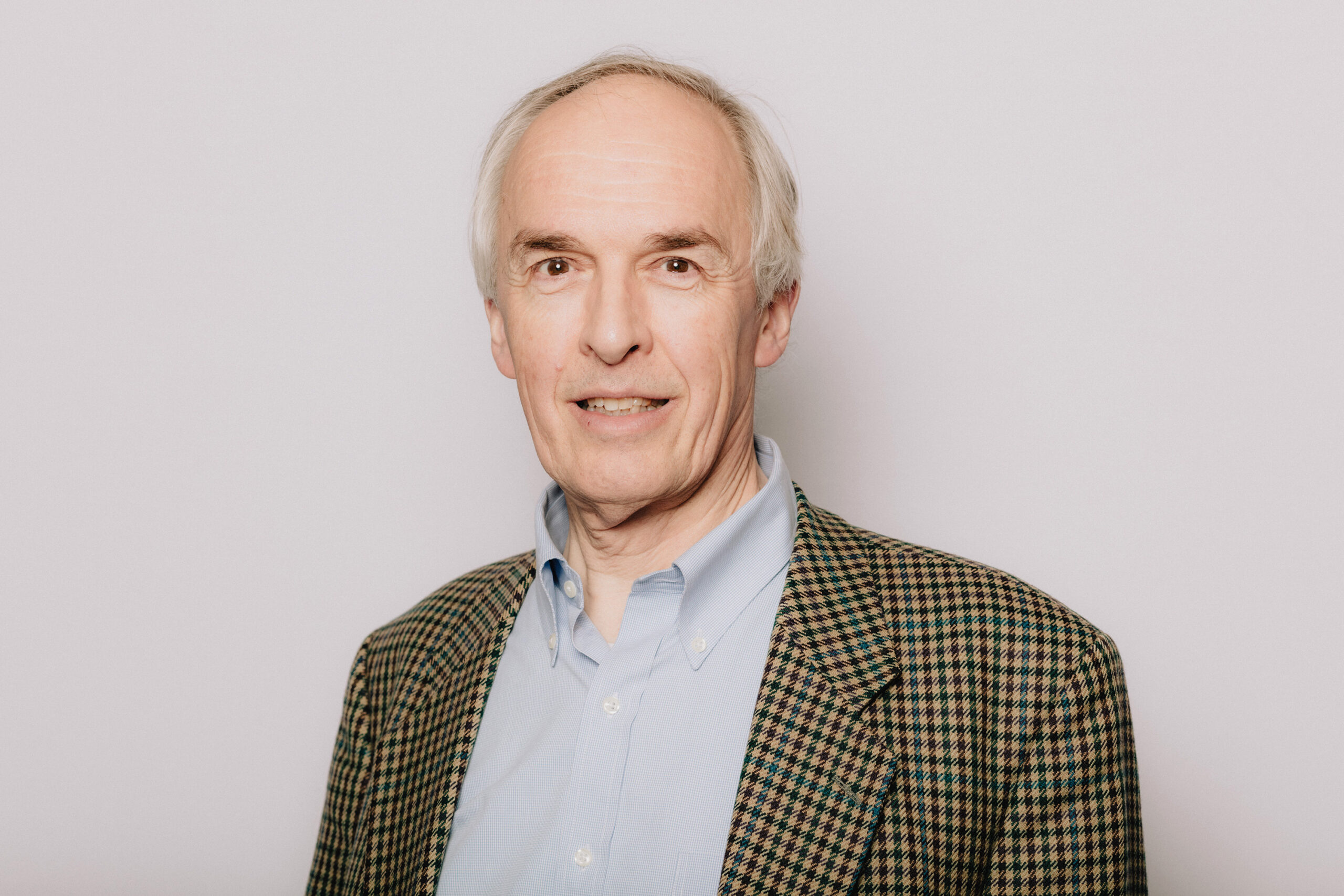
Physician and researcher, Hugues de Thé holds the Chair of Cellular and Molecular Oncology at the Collège de France and is a member of the Académie des sciences.
His work has revolutionized the management of acute promyelocytic leukemia (LAP) by identifying the PML/RARA fusion responsible for the disease—with contributions from Christine Chomienne (Saint-Louis Hospital) and Anne Dejean-Assémat (Institut Pasteur). Within the framework of a collaboration between French and Chinese teams, he demonstrated that the combination of retinoic acid and arsenic destroys the PML/RARA protein driving the disease: retinoic acid acts via its RARA component, and arsenic via its PML component. He showed that combining the two agents allows eradication of the disease in animal models, an observation subsequently translated to patients. This approach enabled cure without chemotherapy and transformed LAP into the first cancer curable by targeted therapy, inspiring new anticancer strategies.
Author of over 400 publications, he has received prestigious honors, including the Sjöberg Prize (Royal Swedish Academy of Sciences) and the Beutler Award (American Society of Hematology). His current research explores treatment response mechanisms and paves the way for innovative therapies for other cancers.
Thanks to this targeted approach, nearly all patients with LAP have been cured without chemotherapy.
This emblematic example illustrates the Institute’s vision: to translate science from the laboratory to the patient’s bedside.
Continuing this mission, the Institute aims to identify the true orchestrators of all leukemia subtypes, in order to uncover the biological and pharmacological levers that will sustainably transform patient care.
« The PML/RARA fusion gene is the true orchestrator of acute promyelocytic leukemia. It is responsible for transforming a normal cell into a leukemic cell. The destruction of the fusion protein by treatment induces the collapse of the disease »
Professor Hugues de Thé
Testimony of Charlotte Cordonnier, Head of the Neurovascular Department at Lille University Hospital, who experienced the unthinkable: becoming a patient with acute promyelocytic leukemia.
“When I was told about the disease, my mind shut down. I kept thinking: what I’m hearing cannot be true.”
Hospitalized as an emergency, she received an innovative protocol based on arsenic and all-trans retinoic acid. This approach, developed through French research, allowed her to be cured without intensive chemotherapy:
“Before, people died. If I had had this disease 30 years ago, I would be dead.”
She recounts the intensity of the journey, the shock, and then the hope:
“One day, a young hematologist handed me this tiny pill… which saved my life.”
Today, Charlotte shares her story to inspire confidence:
“Life comes back, but you have to accept letting go. There is biological recovery, and there is psychological recovery. You do not come out unscathed. But in a few months, it will get better. And in a few years, it will be very good.”
Votre interlocuteur
Charlotte Bouquerel
Head of Strategic Development
We are available to support you with interview requests, media coverage, and photo or video shoots across all medical, scientific, institutional, and event-related topics linked to the Institute’s activities.
As a committed player in the fight against leukemia, the Institute actively contributes to advancing research, care, and public awareness.